Expert Tips from Revive Physiotherapy in Hamilton, Ontario
As temperatures drop and daylight fades, runners in Hamilton face new challenges when trying to stay active through the winter. Cold muscles, icy sidewalks, and unpredictable weather can all increase the risk of strains, slips, and overuse injuries. With the right approach — and support from a physiotherapist when needed — you can continue your training safely, effectively, and pain-free.
1. Warm Up Properly Before Running in Cold Weather
Cold temperatures make muscles and tendons stiffer, which increases the risk of strains and pulls. Before heading outside, start with a warm indoor routine:
Light cardio: skipping, marching, stair climbs
Dynamic mobility: leg swings, walking lunges, hip circles
These movements raise your core temperature and prepare your joints for winter running conditions.
2. Dress in Layers for Safe and Comfortable Winter Runs
Wearing the right clothing is key to maintaining warmth without overheating. Choose:
Moisture-wicking base layers to keep sweat off the skin
Light insulating layers for warmth
Wind- or water-resistant outer layers for protection
Don’t forget gloves, thermal socks, and a hat — good circulation helps reduce injury risk.
3. Choose Your Running Surfaces Wisely
Hamilton winters can bring wet leaves, frost, and icy patches that make running surfaces unpredictable. To reduce your risk of slips:
Shorten your stride and maintain a steady pace
Wear shoes with good traction or trail-style soles
Run on cleared sidewalks or well-lit areas when possible
If conditions feel unsafe, switching to a treadmill or indoor track is a smart alternative.
4. Maintain Strength and Stability Training Through Winter
Winter is an ideal time to build strength — something many runners neglect during busy training seasons. Focus on strengthening:
Glutes
Hips
Knees
Core
Single-leg stability and balance exercises are especially valuable for improving control on uneven or slippery surfaces.
5. Prioritize Recovery and Rest
After winter runs, change out of damp gear quickly to avoid stiffness. Then:
Perform gentle stretching once warm
Add foam rolling or light mobility exercises
Allow enough recovery time between sessions
These steps help reduce muscle tension and keep joints happy during colder months.
6. Seek Physiotherapy Advice Early to Prevent Winter Running Injuries
If you notice persistent tightness, swelling, or discomfort, don’t wait. Early assessment from a Physiotherapist at Revive can identify movement issues, muscle imbalances, and early signs of injury — helping you stay on track through the season.
Stay Strong This Winter with Revive Physiotherapy in Hamilton
Winter running can be rewarding, energizing, and injury-free with the right preparation. At Revive Physiotherapy Hamilton, our team can help you:
Improve running technique
Address muscle imbalances
Build strength specific to winter conditions
Prevent common cold-weather running injuries
A personalized Winter Running Assessment can optimize your form and keep your training consistent all season long.
I’ve been hearing a lot of people around me lately saying things like, “I’m pretty active, I do three yoga classes a week” or “I work in construction, that’s the same as me going to the gym”. At face value, these comments seem true, but are they? How do we know how much is exercise is enough? Talk to a bodybuilder at a gym and they’ll tell you that you need to be in the gym at least 5 days per week, whereas your aunt Kathy might tell you that her twice a week walking program is all she needs. Who’s right?
Well, there’s one key piece of information missing before we can answer this question. How much exercise is enough for what? Depending on your goal, the answer to this question can change drastically. For the purposes of this discussion, we’re going to assume the full question is “How much exercise do I need to be generally healthy?”. Again, the answer can vary depending on your age or if you have other health conditions, but what about for the average person? Fortunately, there is an incredibly useful tool already developed to help answer this question from the Canadian Society for Exercise Physiology (CSEP), one of Canada’s leading authorities on health and exercise.
In October 2020, CSEP released recommendations for how much exercise is enough in their “Canadian 24-Hour Movement Guidelines” based on your age. Many of the people reading this will fall between the 18-64 years old range, for which the recommendation is at least 150 minutes of moderate-vigorous physical activity (exercise that makes you start breathing heavier) per week, and at least two sessions of muscle strengthening exercises each week. It’s not just about being active either, they recommend no more than 3 hours a day of recreational screen time and breaking up long periods of sitting. For those of you who fall outside this age bracket, the links to the recommendations are posted below.
So, there’s your answer on how much exercise is enough to be generally healthy, all laid out in a nice, one-page, easier-to-read document for you. Click the links below to read on
Why do things hurt? It’s a complex subject with many layers. When aches and pains occur it often feels like something in the body must be damaged or injured. Muscles feel weak, slight movements hurt, and even basic tasks seem insurmountable. Physical damage certainly occurs in cases of trauma, such as an ankle sprain or a car accident, but it’s important to recognize that pain is complex, multifactorial, and, more often than not, is your nervous system sounding an alarm. It is not necessarily a sign that something is damaged.
The language we use to describe things that hurt is very mechanical in nature. We say that ‘our back is out’, a ‘rib is out of place’, we have ‘a leg length discrepancy’ and all sorts of other ‘syndromes’ that permeate the diagnostic world. The reality is, pain is caused by way more than just mechanical changes in the body. The above mentioned so called ‘conditions’ are rarely the root cause of the pain we feel. It often surprises our clients to hear that the biggest correlate of low back pain is actually mood and stress level. When life becomes stressful or overwhelming, our bodies can hurt. Our lifestyles play an overarching role in our pain experiences.
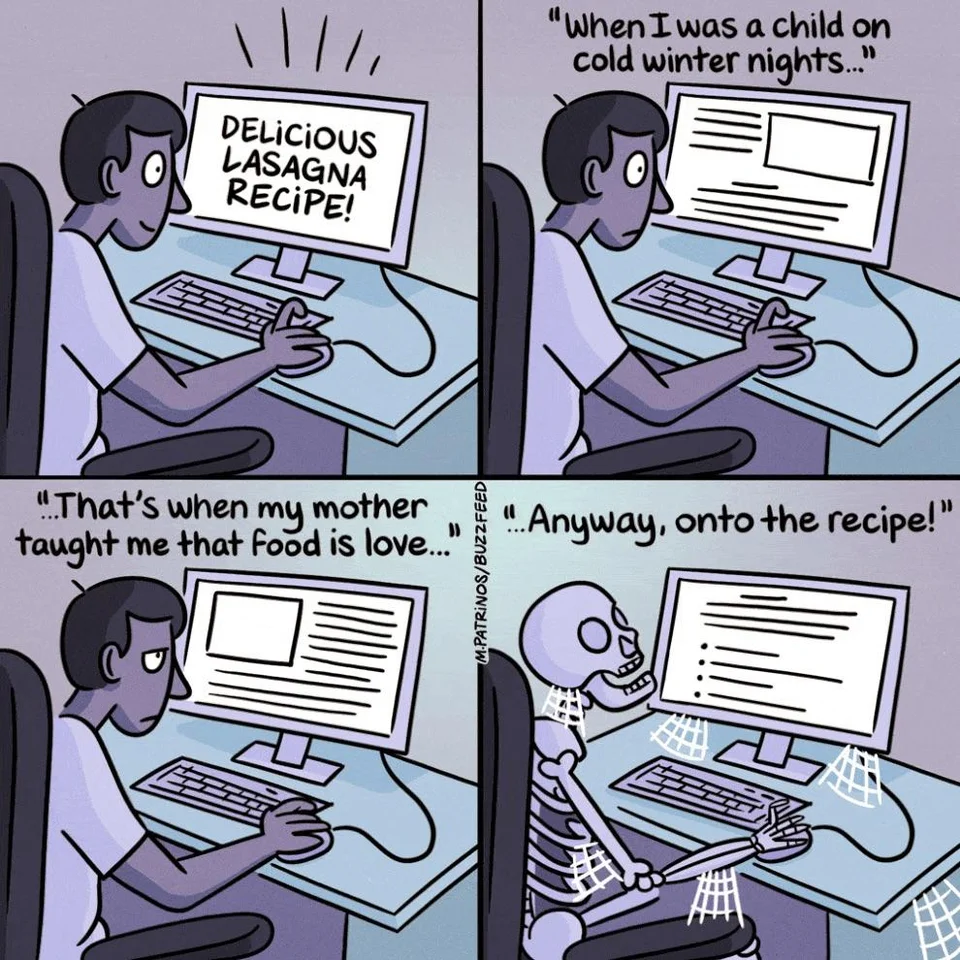
So, if pain is not always associated with actual tissue damage, what is the best way to manage it? At Revive Physiotherapy, when clients experience ongoing discomfort, seemingly without rhyme or reason, the solution isn’t to send them for an x-ray or MRI, It’s about discussing pain triggers, and using this knowledge to manage them. One way we do this is by encouraging our clients to put together a ‘pain recipe’. No, that doesn’t mean a 10 page scroll down a website with description of spring at grandma’s cottage before you finally get to the recipe and forgot what you were going to make in the first place.
A different kind of painful recipe
The flipside of the pain recipe is the pain relief recipe. Once you have your list of what makes things hurt, you then make a list of what calms things down. When do you feel your best. Is It hiking? Movement? Time with friends and family? Downtime from work? Sleeping in? A quiet read in a café or a park? You can’t always get rid of those triggers that increase your pain, but you can sprinkle in some ingredients from the feel good, calming recipe. When things get overwhelming, check your list of activities that bring you joy, and take action.
Aches and pains happen, injuries happen, life happens, but the more in touch you are with your individual triggers, the more equipped you are to manage, control, and work through flare ups. If you’re dealing with persistent pain that keeps rearing its ugly head, take control! Put together your recipes! identify your triggers, keep an eye on them when they start to pile up, introduce some warm fuzzies, and start getting back to the things you love.
A common refrain we hear from our clients during initial assessments goes like this, “I guess it’s just old age” or, “I must be getting old”. So, is pain inevitable? Is this how it has to be? As we get older should we expect our joints to hurt, snap, crackle, and pop?
The answer is complicated. The short answer is no. It doesn’t have to hurt, but, there are a few factors we need to get in check if we want to live a mobile, low pain life.
1) Movement
TLDR: It doesn’t matter what you do. Find something you enjoy, yoga, weightlifting, strength training, hiking. There’s a whole industry and slew of social media accounts making you feel like there is a perfect way to exercise. There isn’t. All that matters is that you choose an activity you enjoy, and do it at a sufficient intensity to get your heart rate up while you’re moving.
2) Previous injury
Unfortunately if you’ve had a prior injury (we are talking traumatic, not light muscle strains or irritation) you are more at risk to develop symptomatic changes in your joints as you get older (changes in the joint are normal, pain associated with them is not). This means you need to take care of those joints. Everyone has a tooth they have to floss a little bit more because it gets more gunk stuck in it, that’s your injured joint. It needs a bit more love. Regularly moving and strengthening the muscles across the joint in a pain free/low pain way will help take care of this part.
3) Lifestyle factors
Bodies are often compared to machines. We are told that things hurt because things are out of place, muscles are overactivated, posture is bad. But really the amount that these factors contribute to pain is minimal. Research now shows that most pain has more to do with what is going on in addition to those changes in our bodies. How are you sleeping? How are you eating? How do you manage stress? Do you worry about your body breaking down with age? What do you do the other 23 hours a day when you are not being active?
That’s your check in, 3 things to keep in mind as we age. Get on top of those nagging old injuries, get active, and keep those healthy lifestyles in check. Doing all these will help keep you moving, feeling good, and working towards the quality of life we all crave well into those golden years.
Anyone who has spent more than a few minutes with us knows that we have a unique (and scientific) approach to pain. We tell everyone who walks through the door of our Physiotherapy clinic that there is nothing wrong with feeling pain. In fact, it’s a good thing. That’s surprising for most people to hear since they come in to get rid of some sort of ache or pain. But the messaging we are sending isn’t that you should suck it up, ignore the pain and move on. It’s that your body is using pain to tell you something. It’s actually trying to protect you.
Think of pain as your bodys check engine light. It’s not telling you that something is damaged, but merely that something in the system requires your attention. This could be due to pushing too hard in your activity, not moving enough, a medical condition, not recovering from exercise effectively, or many other lifestyle factors which contribute to pain.
So. If pain doesn’t equal injury, does that mean it’s ok to keep moving in spite of it? The short answer is yes, kind of, it depends.
Most of the time a low level of pain is OK. Here’s a handy guide for what is an acceptable level of pain when working out, and when you should take a break.
Pain on a 1-2/10 scale (3 is pinching yourself as hard as you can, which can be pretty darn painful.)
Pain doesn’t linger. The pain should disappear shortly after exercise and definitely shouldn’t stick around longer than 24 hours post activity
There are no strange neurological symptoms, noticeable swelling, or bruising.
So, When should you come see a Physiotherapist at Revive?
If your pain is not going away in spite of being consistent with exercise.
Your pain is intensifying
There are neurological symptoms (numbness/tingling/shooting pain/temperature changes in the affected area)
You are avoiding activities because you are scared to make them worse of feel like you can’t do them anymore.
You enjoy hanging out with good people who love movement, coffee, music, and terrible jokes.
Ready to own your pain, and take your body back? Book Online Here!